

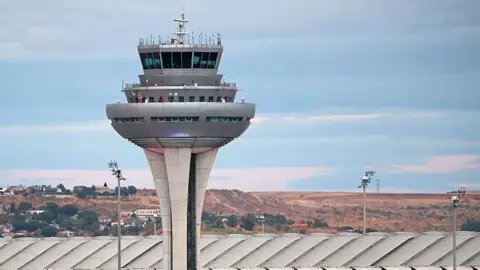
The Spanish government has restricted its skies to American warplanes taking part in strikes on Iran, according to Spain's defense minister Margarita Robles.
Clear Message
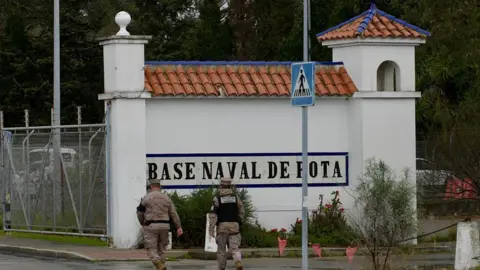
"We are denying the use of the Rota and Morón for any operations connected to the conflict with Iran," Minister Robles stated, adding that Spain had "communicated this position to the United States from the outset."
The top diplomat José Manuel Albares stated the goal of the action was to "avoid any action that could encourage an intensification in this war."
American Reaction
The American administration did not immediately comment, but President Donald Trump has previously threatened to institute a full trade embargo on Spain over its objection to the Iran war.
Sánchez's Opposition
From the beginning of the conflict in February, the Prime Minister Pedro Sánchez has been a prominent voice against of the American and Israeli strikes, describing them as "reckless" and "illegal."
Earlier in March, Sánchez said Spain had refused the US use of the two shared military bases at Morón and Rota, located in Andalusia.
"Spain is a sovereign nation that has no desire to take part in illegal wars," he said.
He also announced that "any proposed route that concerned actions connected to the operation in Iran were denied - without exception, even for refuelling aircraft."
Operational Impact
US warplanes participating in operations in Iran are stationed at the Fairford air base in the UK, subsequent to London's approval to a petition from the US.
Aircraft departing from there will be compelled to avoid much of the region - either by flying over the Atlantic Ocean or over France.
It has been reported that planes would be permitted to enter Spain's skies or land at the bases solely during emergency.
Historical Stance
In a televised address, the Spanish prime minister discussed other conflicts and stated the Spanish government's stance could be described as "opposed to conflict."
Subsequently, the embassy of Iran in Spain said Tehran would be receptive to appeals from Madrid about shipping through the Strait of Hormuz because Spain was "a supporter of international law."
Market Effects
Nearly a significant portion of the international petroleum usually transits through the key maritime channel separating Iran and the peninsula of the Arabia.
For weeks, the threat of strikes by Iranian drones, missiles has kept it effectively closed, causing crude costs to soar.


